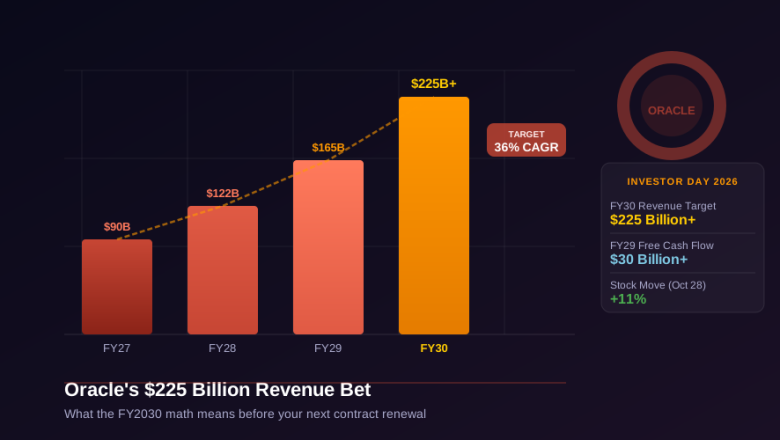
New Mexico’s land commissioner has for the second time blocked a natural gas pipeline critical to Oracle’s $165 billion AI data center campus, deepening a standoff that pits Big Tech’s infrastructure ambitions against the Southwest’s environmental limits.
Oracle’s “Project Jupiter,” a planned AI hyperscale campus sprawling across roughly 1,400 acres in Doña Ana County, New Mexico, is quickly becoming one of the most consequential and contentious infrastructure battles in the American West. What was supposed to be a showcase for U.S. AI dominance — a $165 billion megacampus co-tenanted by OpenAI and Oracle — is now mired in a regulatory dispute over 0.6 miles of state-owned land. On July 14, 2026, New Mexico Commissioner of Public Lands Stephanie Garcia Richard issued her second denial of Energy Transfer LP’s request to build a portion of the “Green Chile Project” pipeline across state trust land, and the ripple effects are being felt across the entire AI infrastructure sector.
A Pipeline to Nowhere — For Now
The Green Chile lateral is a 17-mile, 24-inch natural gas pipeline proposed by Dallas-based Energy Transfer to connect El Paso’s existing pipeline network to Project Jupiter’s on-site power system. Capable of moving up to 400 million cubic feet of gas per day, the pipeline was the lifeline for up to 2.45 gigawatts of Bloom Energy fuel cells that Oracle and its development partner BorderPlex Digital Assets had earmarked to power the massive campus. Those fuel cells, once envisioned as a cleaner alternative to the gas turbines Oracle originally planned, generate electricity through an electrochemical process rather than combustion — but they still depend on natural gas as fuel.
Garcia Richard, who first rejected the pipeline application in March 2026, was asked by Energy Transfer to reconsider. In her July 14 letter, she declined again, citing the same trio of concerns: the project would generate insufficient revenue for state trust beneficiaries, impose outsized burdens on New Mexico’s water resources, and produce emissions incompatible with the state’s climate goals.
“The burden that the project will impose on New Mexico’s water and other natural resources, and on the surrounding community, is extreme,” Garcia Richard wrote. “At a time when New Mexico needs to stop the out-of-control acceleration of climate change, literally doubling down on dangerous emissions is irresponsible and incompatible with NMSLO’s mission.”
The financial math, she argued, was also deeply unfavorable. Energy Transfer’s proposal would generate one-time payments of roughly $31,900 over 35 years, plus annual lease payments of about $43,400 during a five-year term. For a project that promises Oracle shareholders hundreds of billions in returns, those figures amounted to a rounding error.
Energy Transfer has 30 days to appeal the decision. The company has not confirmed whether it will do so, offering only a terse statement that it continues “working through the permitting requirements.”
The August 15 Cliff
The timing is particularly brutal. Project Jupiter’s original in-service target for the pipeline was August 15, 2026 — a date that analysts and energy infrastructure watchers now describe as functionally unreachable. Even if Energy Transfer filed an appeal immediately, the administrative process would extend well beyond that deadline. Bloomberg reported that the rejection “could push construction into next year,” a delay that carries significant cost implications for a campus where construction crews are already on-site.
Oracle has pushed back firmly on the notion that the project is in jeopardy. In a statement to Source New Mexico, an Oracle spokesperson pointed to 4,000 construction jobs, with more than 440 New Mexico residents already working on-site, $50 million earmarked for improvements to Doña Ana County’s water infrastructure, and the company’s pledge to achieve 100% carbon-free energy for its AI data centers by 2035. The spokesperson also contended that the fuel cell system’s average annual water usage is “less than what nine U.S. households use in a year” — a striking claim given that Garcia Richard and independent energy experts have raised concerns about the project’s cumulative resource footprint.
“Our project remains on-schedule, and we continue to work closely with our partners and New Mexico’s public officials to move Project Jupiter forward,” the Oracle spokesperson said.
The Bigger Picture: AI’s Infrastructure Reckoning
Project Jupiter’s regulatory tangles are not happening in isolation. They are part of a broader, nationwide reckoning over the resource demands of artificial intelligence infrastructure. Hyperscale data centers — the facilities that train large language models and host the inference engines that power services like ChatGPT — consume extraordinary amounts of electricity and water. The International Energy Agency has estimated that data centers could consume as much electricity as Japan by the late 2020s if AI adoption continues at its current pace.
States across the U.S. are grappling with how to accommodate this demand. Some, like Texas and Virginia, have effectively rolled out the welcome mat. Others, like New Mexico, are pushing back — particularly in water-stressed regions of the American West where the question of how much cooling water a facility will consume is not an abstraction but a matter of community survival.
What makes Project Jupiter’s situation particularly complex is that Oracle and its partners did adapt their plans. Moving away from gas turbines and diesel generators in favor of Bloom Energy fuel cells represented a meaningful emissions reduction — the fuel cells are significantly cleaner, and Oracle was right to highlight that evolution. But the fuel cells still need gas, and the gas still needs a pipeline, and that pipeline still needs to cross a half-mile of state land that New Mexico’s land commissioner has twice decided is not worth the trade.
The New Mexico Environment Department has scheduled a public hearing on Project Jupiter’s air quality permit for October 2026, adding another procedural layer to the timeline. An independent energy expert told state lawmakers in July that the project, even with fuel cells, could set back New Mexico’s air quality progress by as much as 20 years — a claim Oracle disputes vigorously. Meanwhile, the New Mexico Attorney General has announced an investigation into what officials described as “alleged fraudulent” letters sent in support of Project Jupiter during the public comment process — a development that further complicates Oracle’s community relations narrative.
What Happens Next
Oracle faces a three-pronged challenge: appealing or working around the pipeline denial, navigating the October air quality hearing, and managing investor expectations after the New Mexico State Land Office has now twice said no to the energy infrastructure the project requires.
One possible path forward involves rerouting the pipeline entirely onto federal or private land, sidestepping the state-owned parcel that Garcia Richard controls. Energy Transfer holds permits across federal lands for portions of the Green Chile lateral, and the rejected segment represents only a fraction of the total route. Whether a workaround route is technically and economically viable remains unclear, but it may be the most viable path to keeping Oracle’s August timeline in any kind of reach.
The situation also carries political dimensions that are becoming harder to ignore. Garcia Richard is reportedly in contention for the Democratic lieutenant governor nomination ahead of New Mexico’s November 2026 election, and her repeated refusals of Project Jupiter permits have raised her profile considerably. Oracle, for its part, has framed the project as a generational economic opportunity for New Mexico, and the company has made a deliberate public case for the direct community benefits it says will flow from the campus.
For the broader tech industry watching from the sidelines, the standoff is deeply instructive. The era of siting hyperscale AI campuses in willing rural areas without serious local regulatory friction may be ending. Oracle’s experience in New Mexico — where even a $165 billion project backed by OpenAI cannot easily secure a right-of-way across a half-mile of state trust land — suggests that the bottleneck for AI’s next infrastructure wave may not be capital, compute, or software. It may be pipes, permits, and politics.
Project Jupiter was supposed to be Oracle’s boldest statement yet about its place in the AI era. Whether it becomes a landmark in AI infrastructure or a cautionary tale about megaproject hubris in the American West may depend on decisions made not in Austin or Austin’s data halls, but in a land commissioner’s office in Santa Fe.
Sources: Source New Mexico, Bloomberg, Seeking Alpha, Data Center Dynamics, ABQ Journal, Oracle press releases