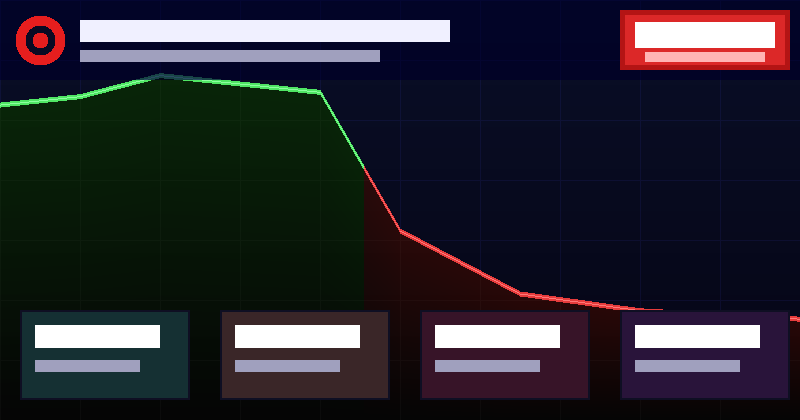
When Oracle’s stock shed 35% in a single month — its worst monthly decline since 1990 — and then closed out the week of June 23 with its most punishing five-day stretch since the 2001 dot-com collapse, the financial world took notice. But for enterprise IT leaders watching from the sidelines, the message is more nuanced than a simple “sell” signal. It is a warning shot about the structural risks baked into the AI infrastructure boom, and a harbinger of what may be coming for the entire sector.
The Numbers That Spooked Wall Street
Oracle entered June 2026 flying high. Its Q4 FY2026 earnings showed revenue up 20% in constant currency. Cloud infrastructure — the company’s bet-the-farm segment — surged 92% year over year to $5.8 billion in quarterly revenue. Its remaining performance obligations (RPO), the forward-looking metric that captures contracted but unfulfilled revenue, ballooned to a jaw-dropping $638 billion, up $85 billion from the prior quarter alone.
Those are not the numbers of a company in crisis. And yet, by the time June ended, Oracle (NYSE: ORCL) had shed more than a third of its market value, with shares tumbling from above $200 toward the $140s — a level that puts them down roughly 56% from their all-time high of around $346.
So what went wrong? In a word: cash.
A Cash-Burning Machine
The earnings call that triggered the sell-off revealed the uncomfortable math behind Oracle’s growth story. Over the trailing twelve months, Oracle burned through approximately $24 billion in free cash flow. The company already carries more than $100 billion in debt on its balance sheet. And for fiscal year 2027, Oracle announced plans to raise an additional $40 billion through a combination of debt and equity issuance to fund its ongoing data center build-out.
Capital expenditures in FY2026 rose 162% to nearly $56 billion. The forward guidance suggests that number could climb to between $90 billion and $95 billion in FY2027. That is a level of infrastructure investment that makes even Amazon Web Services and Microsoft Azure’s spending look measured by comparison.
Investors ran the numbers and came to a sobering conclusion: Oracle’s cloud expenses are growing meaningfully faster than its cloud revenue. Operating income, when adjusted for currency effects, rose only 13% — far below the top-line growth rate. The company is winning business aggressively, but each dollar of new cloud revenue appears to be costing more to deliver than the last.
The OpenAI Concentration Problem
Perhaps the most alarming detail to emerge from the June earnings cycle was a number that, in a different context, would have sounded like pure triumph: approximately $300 billion of Oracle’s $638 billion RPO backlog is tied to a single customer — OpenAI.
On the surface, landing OpenAI as an anchor tenant for half your contracted revenue pipeline is a coup. In practice, it is one of the most extreme customer concentration risks in the history of enterprise computing. If OpenAI stumbles — whether due to competitive pressure from Google, Anthropic, Meta, or a broader pullback in AI investment — Oracle’s ability to service its debt and justify its capex program becomes a very different conversation.
Wall Street analysts have begun asking pointed questions: Is Oracle winning these massive AI infrastructure contracts by underbidding competitors? And if so, is the $638 billion backlog a genuine measure of profitable future revenue, or a volume-at-a-loss strategy that cannot survive a more rational pricing environment?
“It is possible that Oracle is winning these contracts by underbidding competitors like AWS, which has historically been very cost-disciplined,” noted Motley Fool analyst Brett Schafer in a July 6 assessment. “Combined with the heavy cash burn at the moment, it is no wonder that it has been cut in half over the last few quarters.”
The Dot-Com Echo
The “worst week since 2001” framing is not accidental. During the dot-com era, Oracle was one of the companies that briefly looked like it could do no wrong — until the capital markets decided that revenue growth alone could not justify the investment required to sustain it. The parallel is imperfect: today’s Oracle has real, substantial revenue and genuine cloud infrastructure that serves actual customers. But the structural question — can you build out this much capacity, at this much cost, and eventually generate returns that justify the leverage? — is eerily familiar.
Enterprise technology cycles have a way of producing exactly this kind of correction. Companies that build capacity ahead of demand, funded by cheap or not-so-cheap debt, often look like geniuses during the build phase and face brutal reckonings when the market asks for proof of profitability.
The dot-com parallel extends to the narrative arc as well. In the late 1990s, Oracle was among the loudest voices arguing that enterprise software was being transformed by the internet. Larry Ellison and his team were right about the direction of the industry — but the capital markets repriced the company severely when execution reality failed to match the hype timeline. Today, Oracle is making a similarly correct-sounding bet on AI infrastructure. The question is not whether AI will reshape enterprise computing; it almost certainly will. The question is whether Oracle’s specific capital structure can survive the gap between promise and profitability.
What This Means for Enterprise Customers
For CIOs and IT leaders evaluating Oracle as a cloud infrastructure partner, the June crash raises legitimate questions that go beyond stock price.
The first is counterparty risk. A vendor carrying $100 billion in debt and planning to issue $40 billion more is not facing imminent collapse — Oracle’s revenue base and long-term contracts provide real stability. But enterprise procurement teams negotiating multi-year cloud deals should understand the financial leverage their vendor is carrying, and what a refinancing environment might look like if AI investment cycles cool.
The second is pricing stability. If Oracle has been aggressively pricing AI infrastructure contracts to capture market share from AWS and Azure, those prices may not be sustainable long-term. Customers who sign today at rates that reflect Oracle’s land-grab strategy may find future pricing power shifting back toward the vendor once the competitive landscape settles.
The third is execution risk. Building $90 to $95 billion worth of data centers in a single fiscal year requires navigating GPU shortages, power constraints, construction delays, and regulatory hurdles. Oracle’s own SEC filings now explicitly enumerate these risks — an unusual level of candor that reflects how seriously the company is taking the operational challenge. Enterprise customers who need capacity delivered on predictable timelines should be asking hard questions about fallback plans.
The Broader AI Capex Warning
Oracle’s troubles do not exist in isolation. Across the technology industry, the question of whether the AI infrastructure build-out will generate returns commensurate with the capital being deployed is becoming more urgent. Microsoft, Amazon, Google, and Meta are all spending at extraordinary rates on data centers and GPU clusters. Oracle has simply gone further, faster, and with more leverage than its peers.
Gizmodo’s headline from early July captured the mood well: “Oracle’s Data Center Warning Is a Worst-Case Scenario for the Whole AI Boom.” The implication is that if Oracle — which has the most aggressive AI infrastructure bet of any major enterprise software company — starts showing signs of financial strain, it raises questions about the entire sector’s capex thesis.
This matters for the software industry broadly, not just Oracle shareholders. If the dominant narrative of 2025 and early 2026 was that AI infrastructure spending would continue to accelerate indefinitely, Oracle’s June collapse has introduced a competing narrative: that the build-out has outpaced the ability of the underlying business model to generate returns. That competing narrative, if it gains traction, could affect how the market prices every company riding the AI wave.
Looking Ahead
Oracle’s next major catalyst will be its Q1 FY2027 earnings, expected in September 2026. By then, investors will be watching for any signs that cloud revenue growth can outpace expense growth, that the debt load is manageable under current interest rate conditions, and that the RPO backlog — particularly the enormous OpenAI component — is translating into actual cash-paying utilization rather than contracted commitments that may prove difficult to fulfill.
For now, Oracle trades around $143 to $144, a below-market P/E multiple that reflects deep skepticism about its near-term profitability trajectory. The bulls argue that the backlog is real, the AI demand is real, and that a company growing cloud infrastructure revenue at 92% is building something genuinely transformative. The bears argue that without free cash flow, the growth story requires sustained access to capital markets under conditions that may not persist indefinitely.
Both views contain truth. What is certain is that Oracle’s June crash has introduced a new word into the AI infrastructure conversation — one that was not widely used six months ago: reckoning.
*Sources: The Motley Fool, Bloomberg, Gizmodo, FX Leaders, Seeking Alpha, GuruFocus, CNBC*


